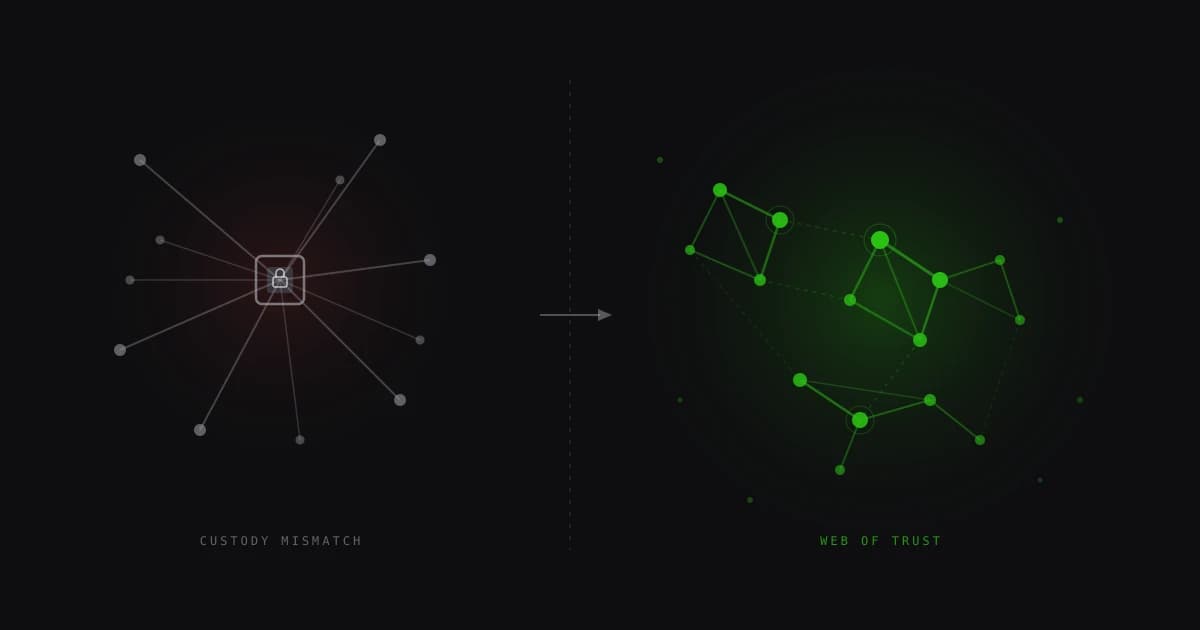
crypto-agility.json: a place to publish cryptographic posture

proposal and reference implementation last updated October 11, 2026 · this retrospective was written October 12, 2026
i wanted a predictable place to find out what cryptography a project says it uses, what it plans to change, and what evidence supports those statements
today those answers can be spread across documentation, scan reports, vendor pages and conversations. a tool trying to assess a dependency needs a way to find them. so does someone deciding whether a service can meet their migration requirements
my proposal is a small JSON document at /.well-known/crypto-agility.json. it borrows the discovery idea from security.txt: start with a known location, then make the contents useful to both people and software. the public repository holds the drafts, schemas, examples and reference tools
what i wanted the file to do
a cryptography inventory answers which algorithms appear in a system. a migration decision also needs context: where those algorithms are used, whether classical fallback is allowed, how recently something was measured, and what still blocks a change
the manifest provides a public entry point to that information. it can point toward a fuller cryptography bill of materials and supporting evidence without publishing every internal detail. CI tools, auditors and coding agents can read the same structure instead of building a new integration for each project
publication is only the beginning. a file served by a website tells me what that website is declaring. i still need to decide whether its evidence is relevant and trustworthy
the October revision
the version 2 candidate separates three things that are easy to confuse: an operator's declaration, a runtime observation, and a consumer's verification of the evidence
it also separates key establishment from authentication. a connection can negotiate a hybrid key exchange while still using classical certificate signatures. reporting only that it supports “PQC” would hide that distinction
the candidate describes a specific subject, endpoint profiles, capabilities, dated observations, evidence references and migration status. browser, server and device profiles can have different constraints. a successful test against a gateway does not establish what happens on the gateway's next connection to a device
freshness matters too. retrieving the same file again must not make an old measurement current. evidence needs its own time and scope, and unknown or missing data needs to remain unknown
version 2 changes the data model. existing version 1 producers remain supported through the documented tooling, but a consumer must understand the version it receives. it must not reinterpret an old readiness score as a new runtime observation
making the proposal checkable
i added reference tools for bounded discovery, schema and semantic assessment, real TLS probing, signed observation ingestion, attestation verification and monitoring. the implementation record distinguishes what was tested from what remains to be demonstrated
that distinction applies to signatures as well. verifying an issuer's signature establishes who made a statement under the configured trust policy. it does not establish that the measurement was correct or that the whole system is secure. a manifest also cannot grant itself permission to change a consumer's policy, install software or rotate keys
the October work includes a merged reference implementation and production collection receipts. the remaining work includes the authenticated collector-to-issuer path, exact evidence and manifest binding, consumer monitoring, and independent interoperability. the production measurements recorded there were unsigned; i am not treating them as authenticated attestations
where it stands
the repository was last updated on October 11, 2026. the latest submitted Internet-Draft is still draft-acosta-crypto-agility-manifest-01, whose text is dated August 7, 2026. the October -02 candidate has not been submitted, and this remains an individual proposal, not an IETF standard. the Datatracker record and submission-readiness notes make those stages visible
what i want from the proposal is a useful starting point for a harder conversation: what cryptography is actually in use, what can be changed, and what evidence would let someone rely on the answer
similar posts
Deadline aware hybrid optimization for ISP traffic engineering
oct 11, 2026
making post-quantum signatures faster
oct 12, 2026
nostr is centralizing. by design
mar 5, 2026
my post-quantum proposals for Nostr
aug 17, 2026
post-quantum authentication in Prague
oct 12, 2026
social networks and custody mismatch
mar 11, 2026